Need Help? +44 (0) 123 4567
You can add your content here.

Current & Voltage

Filters
Featured
Popularity
Date
Set Ascending Direction
View as Grid List
Items 1-24 of 51
24
36
48
60

A current voltage sensor module can mean very different hardware. INA219 and INA226 are I2C power-monitor parts for DC projects, while CTs and ZMPT101B handle AC sensing. ACS712 measures AC/DC current with isolation, but it is the lower-precision option compared with INA-class shunt monitors. Some panel meters here require an external 75mV shunt above 10A.

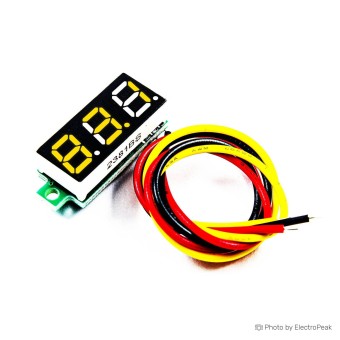
  1. 85C1 DC Ammeter 85C1 DC Ammeter 85C1 DC Ammeter 85C1 DC Ammeter
    85C1 DC Ammeter
    141234
    85C1 DC Ammeter
    SAVE
    As low as $1.7500
  2. 141234
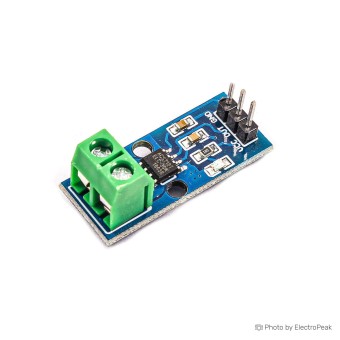
    ACS758LCB Current Sensor Module
    SAVE
    As low as $3.5000
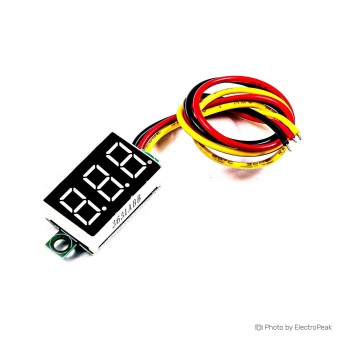
  3. 85L1 AC Voltmeter 85L1 AC Voltmeter
    1212
    85L1 AC Voltmeter
    SAVE
    As low as $1.7500
  4. 141234
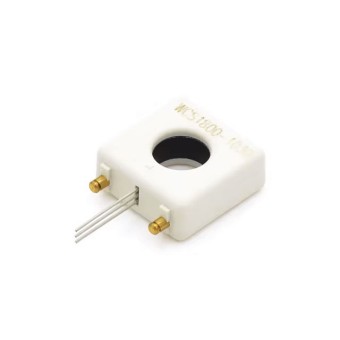
    SUI-201 DC Energy Metering Module
    SAVE
    As low as $12.9500
    Rating:
    20%
  5. 85C1 DC Voltmeter 85C1 DC Voltmeter 85C1 DC Voltmeter 85C1 DC Voltmeter
    141234
    85C1 DC Voltmeter
    SAVE
    As low as $1.7500
    Rating:
    100%
Page
24
36
48
60

Choose the right sensor type first

Use case Best-fit product family in this category Measures Interface / output Key trade-off
Low-voltage DC with voltage/current/power logging INA219 I2C current and voltage sensor or INA226 power monitoring module DC current, voltage, and power I2C INA219/226 are DC-focused I2C monitor choices; they are not the right pick for AC mains measurement
Multiple DC rails INA3221 triple-channel sensor 3 independent DC channels I2C INA3221 offers 3 independent channels and a configurable I2C address, but it is still a DC monitor rather than an AC meter
AC current only ZMCT103C 5A/5mA current transformer, ZMCT102W 5A/2.5mA CT, or ZEMCT303A 40A/40mA current transformer AC current Transformer output CTs such as ZMCT103C, ZMCT102W, and ZEMCT303A are AC current parts, not DC sensors
AC voltage only ZMPT101B 250V AC sensor module or the PCB transformers ZMPT101B 2mA/2mA voltage transformer and ZMPT107 2mA/2mA voltage transformer AC voltage Analog output or transformer output ZMPT101B is the AC voltage path, and the module version measures AC up to 250V with analog output
High-current isolated DC sensing ACS712 ±5A current sensor for small currents or ACS758LCB 50A current sensor for larger loads Current only, AC or DC on Hall sensors Analog output ACS712 measures AC/DC current and provides isolation, but Hall-effect sensors are the rougher-accuracy path compared with shunt-based INA monitors
USB charger/cable testing FNIRSI-FNB38 USB tester USB voltage, current, protocol-oriented test data Built-in display / USB inline tool FNIRSI-FNB38 is for USB testing, with 4-24V/6.5A range and protocol-oriented use rather than embedded circuit sensing
Standalone panel readout without MCU 100V 10A DC digital voltmeter & ammeter, 100V 50A DC digital meter, or 100V 100A DC digital meter Display value only LED panel display 100V 10A, 50A, and 100A panel meters are display products for direct readout, not I2C logging sensors

If you need logging, alarms, or firmware control, an MCU-based build is the better fit than a panel meter. For that path, see building a simple custom meter around sensor modules.

DC monitoring: INA219 vs INA226 vs INA3221 vs ACS712 vs ACS758

Product family AC/DC capability Best current range/use Output/interface Isolation Key limitation
INA219 DC only Basic 1-channel low-voltage DC monitoring; commonly framed around ±3.2A with the stock shunt I2C No 3-5V supply and bidirectional measurement make it a straightforward starting point, but it should not be used above 26V common-mode
INA226 DC only Battery, robotics, LED, and power monitoring where resolution matters I2C No Higher precision costs more, but you get 0-36V bus sensing, 16-bit ADC resolution, 0.1% max gain error, and bidirectional sensing
INA3221 DC only Multi-rail monitoring I2C No 3 independent channels, 0-26V input range, configurable I2C address, and <1mA consumption, but it is not the right path for AC
ACS712 ±5A current sensor AC or DC current Small-current isolated sensing, motor detection, protection Analog output 2.1kV RMS isolation ±5A range, 185mV/A output, and 1.2mΩ internal resistance are useful, but analog Hall sensing is poor for sub-100mA work on a 10-bit Arduino ADC
ACS758LCB 50A current sensor AC or DC current High-current isolated DC sensing Analog output Yes Up to 50A range, 1.5% accuracy, 120 kHz bandwidth, and 100 μΩ internal resistance, but it is still a Hall sensor rather than a precision shunt monitor

For small DC currents, precision matters more than isolation. The INA219 board is the cleanest place to start, and how INA219 wiring and readings work in a DC monitoring project is a useful next step if you are pairing it with an MCU. If you are building a logger around an ESP32, I2C parts like INA219 and INA226 avoid the ADC limitations that make analog Hall sensors harder to trust. For isolation or tens of amps, Hall-effect parts fit better: ACS712 for modest current, ACS758 when 50A-class loads make a small shunt impractical. The trade-off is real. Hall-effect sensors are around ±1.5–5% plus noise and drift, while calibrated shunt-based INA monitoring is closer to roughly 0.2–0.5%.

AC sensing and mains-adjacent projects: what these current & voltage sensors can and cannot do

Product Measures AC/DC Isolation fact Output style Best fit
ZMCT103C 5A/5mA current transformer Current AC only Transformer-isolated Current transformer output Small AC current sensing; 5A input/5mA output, 1000:1 turns ratio, 0.2 accuracy class, 45-55 Hz operation
ZMCT103C 5A AC sensor module Current AC only Transformer-isolated Analog output Easier AC current interface; 0 to 5A AC range, 2000:1 ratio, onboard calibration potentiometer
ZMCT102W 5A/2.5mA current transformer Current AC only 4500V isolation voltage Current transformer output Compact AC sensing where 2000:1 turns ratio and ≤0.2% linearity matter
ZEMCT303A 40A/40mA current transformer Current AC only Transformer-isolated Current transformer output Higher-current AC measurement; 40A rated input, 1000:1 turns ratio, ±1% accuracy, epoxy encapsulation
ZMPT101B 250V AC sensor module Voltage AC only Isolated transformer-based sensing Analog output AC voltage measurement up to 250V with a multi-turn calibration potentiometer
ZMPT101B 2mA/2mA voltage transformer Voltage AC only 4000V isolation voltage Transformer output PCB-mounted AC voltage sensing; 1000:1000 turns ratio and ≤0.2% linearity
ZMPT107 2mA/2mA voltage transformer Voltage AC only 4000V isolation Transformer output Alternate isolated AC voltage transformer with 1000:1000 turns ratio
70-500V AC digital voltmeter Displayed voltage AC only Panel-meter style readout LED display Simplest AC voltage display; two-wire connection and no separate power needed

CTs are AC-only: ZMCT103C, ZMCT102W, and ZEMCT303A are AC current sensing options, not DC sensors. For mains-adjacent Arduino projects, isolated sensors such as CTs and ZMPT101B are the safe component class; non-isolated INA modules do not belong in the mains path. A CT by itself measures current, or at most apparent power if you multiply by RMS voltage. Real AC watts need voltage and current sampled together with phase awareness. That is why CT-only setups do not deliver utility-style kW or kWh. If you are looking at the AC-voltage path, how AC voltage sensing with ZMPT101B is calibrated and read shows the extra setup involved.

Before you buy a current & voltage sensor: range, calibration, and extra parts that cause the most mistakes

  • Choose a rated range about 1.2–2× your real max load. Oversizing destroys resolution, which is why a 100A-class part is a bad fit for sub-amp measurements.
  • CT accuracy claims are meaningful only between 10–120% of rated current. Below that, oversized CTs can miss low appliance loads entirely.
  • The ACS712 ±5A module outputs 185mV/A and centers zero current at 2.5V (VCC/2). External magnetic fields can shift the reading, so zero offset and filtering matter.
  • Hall and CT sensors can show phantom readings around 0.2–0.5A. In software, anything below about 1% of range is often treated as zero.
  • The ZMPT101B AC sensor module includes a multi-turn calibration potentiometer, and per-unit sensitivity calibration is mandatory.
  • Check whether the current-sense part is already included. The 100V 50A DC digital meter requires an external 75 mΩ shunt for current measurement, and the 100V 100A DC digital meter requires a separate external shunt and does not support direct ammeter connection.
  • Matching add-ons are available as 30A 75mV current shunts, 50A 75mV shunts, and 100A 75mV shunts; all are 0.5 accuracy class.
  • A simple 25V DC voltage sensor module scales input by a factor of 5 and offers 0.00489V resolution across a DC 0-25V range. It is useful for basic low-cost DC measurement, not isolated mains sensing. If that is the kind of build you want, how a simple resistor-divider voltage module works with Arduino covers the setup.
  • If precision matters, analog sensors are a weaker fit on ESP32 because of ADC nonlinearity. For simple MCU-based monitors, Arduino boards and I2C sensors such as INA219 or INA226 are the cleaner combination.

Quick reference matrix for the main products on this page

Product name Measures AC / DC Range / key spec Output / display Extra hardware / setup note Best fit
INA219 I2C current and voltage sensor Current, voltage, power DC I2C, bidirectional measurement, 3-5V supply range I2C Check bus voltage before use Beginner-friendly digital DC monitoring
INA226 I2C power monitoring module Current, voltage, power DC 0-36V bus sensing, 16-bit ADC, 0.1% max gain error I2C Better fit when accuracy matters Higher-precision DC monitoring
INA3221 triple channel sensor Current and voltage on 3 rails DC 3 independent channels, 0-26V input range, configurable I2C address, <1mA consumption I2C Multi-rail setup rather than single-channel precision Battery and rail monitoring
ACS712 ±5A current sensor Current AC / DC ±5A, 185mV/A, 2.1kV RMS isolation, 1.2mΩ internal resistance Analog output Zero-current output is centered at 2.5V; filtering often needed Compact isolated Hall choice
ACS758LCB 50A current sensor Current AC / DC Up to 50A, 1.5% accuracy, 120 kHz bandwidth, 100 μΩ internal resistance Analog output Better matched to high current than ACS712 High-current Hall choice
ZMPT101B 250V AC sensor module Voltage AC Up to 250V AC, analog output Analog output Multi-turn calibration potentiometer; manual calibration required AC voltage module
ZMCT103C 5A/5mA current transformer Current AC 5A/5mA, 1000:1, 0.2 accuracy class, 45-55 Hz Transformer output Current transformer setup may require burden planning Small-range AC CT reference
ZMCT103C 5A AC sensor module Current AC 0 to 5A AC range, 2000:1 ratio, analog output Analog output Onboard calibration potentiometer simplifies interface Packaged AC-current module
ZMCT102W 5A/2.5mA current transformer Current AC 5A/2.5mA, 2000:1, 4500V isolation, ≤0.2% linearity Transformer output Compact CT for isolated AC sensing Precise compact CT
ZEMCT303A 40A/40mA current transformer Current AC 40A/40mA, 1000:1, ±1% accuracy Transformer output Higher-current AC option Motor and higher-load AC sensing
25V DC voltage sensor module Voltage DC DC 0-25V, factor-of-5 scaling, 0.00489V resolution Analog output Divider-based module, not isolated Basic voltage sensor module for Arduino
100V 10A DC digital voltmeter & ammeter Voltage and current display DC 0-100V, 10A, dual 0.28" LED display LED panel display No data interface Direct-read panel meter
100V 50A DC digital meter Voltage and current display DC 0-100V, 50A, reverse protection LED panel display Requires external 75 mΩ shunt Higher-current panel meter
100V 100A DC digital meter Voltage and current display DC 0-100V, up to 100A, reverse protection LED panel display Separate external shunt required Highest-current panel meter
70-500V AC digital voltmeter Voltage display AC 70-500V AC range, two-wire connection LED panel display No separate power needed Simplest AC panel-voltage readout
FNIRSI-FNB38 USB tester USB voltage and current test data DC / USB 4-24V/6.5A range, 1.77" TFT LCD Built-in display USB protocol-oriented tool, not a wiring-in module Chargers, cables, and power banks

If you shortlist the Hall option, reading an analog Hall current sensor with Arduino shows the practical side of the ACS712 path. For Wi‑Fi logging, ESP8266 boards are a common fit for AC or DC monitor builds.

FAQs on Current & Voltage Sensors

Can one sensor here measure both AC and DC current?

Yes — ACS712 and ACS758LCB can measure AC/DC current; INA219, INA226, and INA3221 are DC only; ZMCT103C, ZMCT102W, and ZEMCT303A are AC-only current transformers. That makes Hall sensors the only family here that covers both AC and DC current measurement.

Why do Hall current sensors show readings when nothing is connected?

Hall sensors and CTs have a normal noise floor, and phantom readings around 0.2–0.5A are common on higher-range setups. The ACS712 module also centers its zero-current output at 2.5V (VCC/2), so supply noise, ADC noise, and nearby magnetic fields can move the apparent zero point.

Is INA219 safe for higher-voltage battery packs?

No — battery packs above 26V common-mode are the classic failure case for INA219, while INA226 is the step-up option here with 0-36V bus voltage sensing. If your pack voltage is close to that limit, skip INA219 entirely.

Do the 50A and 100A digital panel meters include the current shunt?

No — the 100V 50A DC digital meter requires an external 75 mΩ shunt, and the 100V 100A DC digital meter requires a separate external shunt. Matching catalog options are available as 30A, 50A, and 100A 75mV shunts, so panel-meter orders need two parts rather than one.

Is ZMPT101B plug-and-play for mains voltage measurement?

No — the ZMPT101B module measures up to 250V AC and includes a multi-turn calibration potentiometer, but per-unit sensitivity calibration is mandatory and readings shift with ADC reference stability. It is an isolated AC voltage front end, not a finished wattmeter.

Which option is best for small DC currents in robotics or battery projects?

INA219 or, for better precision, INA226. For a current sensor for robotics or battery logging, INA-class shunt monitors can reach roughly 0.2–0.5% after calibration, while the ACS712 on a 10-bit Arduino is about 26mA per step on the 5A variant and is poor for sub-100mA work.

Can these parts measure real AC power and kWh by themselves?

Not from current-only parts alone: ZMCT103C, ZMCT102W, and ZEMCT303A measure AC current, while real AC watts need voltage and current sampled together with phase awareness. ZMPT101B adds voltage sensing, but you still need calibration, RMS handling, power factor calculation, and time integration to get meaningful kWh.

Glossary

Burden resistor
The resistor that converts a current transformer’s output current into a measurable voltage, and the wrong value can ruin CT accuracy or calibration.
Shunt resistor
A precision low-value resistor placed in the current path for current measurement; it is the basis of INA-style sensing and the external 75mV shunts used by higher-current panel meters.
Common-mode voltage
The voltage present on the sensed line relative to the monitor’s ground; exceeding it is the usual reason INA219 modules fail on higher-voltage packs.
Isolation
Electrical separation between the measured circuit and your controller, which is what makes Hall sensors, CTs, and voltage transformers suitable for mains-adjacent measurement.
Power factor
The reason AC watts do not always equal volts × amps, because voltage and current can be out of phase.
2-wire vs 3-wire panel meter
A 2-wire meter powers itself from the measured circuit, while a 3-wire style uses a separate supply so it can keep reading at lower measured voltages.
To Top
Help
Shop
Account
0 Cart