| Arduino or ESP32 hobby build |
GY-NEO-6M V2 GPS Module or GY-NEO-8M V2 GPS-GNSS Module |
A gps module for arduino usually uses UART TTL output, which is what Arduino, ESP32, STM32, and many flight controllers expect. NMEA output also works cleanly with TinyGPS++. |
Buying a USB-only receiver when your host wants TX/RX pins, or expecting indoor fixes without sky view |
If you want the simplest beginner host, start with Arduino boards and a UART GPS board |
| Drone or flight controller |
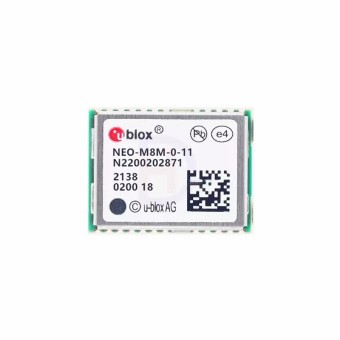
GY-NEO-8M V2 multi-constellation board |
For a gps module for drones, open-sky GNSS is the right technology, and the 8M class is the safer fit for navigation and fix robustness |
Entry GPS-only boards can under-buy you on update rate and constellation support for moving aircraft |
If you need centimeter-class positioning, a standard GNSS board is not enough; move to an RTK system instead |
| Raspberry Pi, PC, or laptop navigation/logging |
VK-162 USB GPS Receiver |
USB is the plug-and-play route for Pi, PC, and laptop users who do not want UART wiring. It is the easiest match for a Raspberry Pi host. |
Buying a TTL module and then needing adapters, level checks, and serial setup |
If you use iPad or iPhone, skip USB GPS and use an MFi Bluetooth GPS receiver instead |
| Tracker that must send location remotely |
SIM808 GSM/GPS/GPRS module |
Plain GPS receivers only receive location. Projects that must report position over distance need GSM/GPRS + GPS hardware. |
SIM808 is only practical where 2G/GSM service still exists |
If you already know you need remote reporting, see building a DIY GSM + GPS tracker |
| Indoor robotics or warehouse positioning |
Decawave DWM1000 UWB transceiver, Anxinke BU01 UWB module, or DWM3000 UWB transceiver shield |
Outdoors with open sky points to GNSS; indoor or local positioning points to UWB instead. UWB positioning modules here target about 10 cm relative positioning where GPS has poor indoor performance. |
One module alone is not an indoor positioning system; UWB needs anchor infrastructure and does not give global coordinates |
If you need latitude/longitude outdoors, stay with GNSS instead of UWB |
| Centimeter-accuracy ambitions |
— |
Standard consumer GNSS is about 3–10 m outdoors, and a more realistic open-sky expectation for these modules is roughly 2.5–5 m |
Expecting cm accuracy from a normal receiver board |
Choose an RTK receiver with corrections rather than this standard GNSS family |
| Non-builder who only wants tracking |
— |
These parts are for integration, wiring, and firmware work |
Buying modules when you really want an app-ready device |
Use a pre-built tracker, a smartphone, or skip the build entirely |



Please complete your information below to login.
Sign In
Create New Account