Choose the right driver family for your stepper motor and project
Start with wire type and rated current per phase, then check noise and application. A 5-wire unipolar motor and a 4-wire bipolar motor do not use the same driver family, and on chopper drivers the supply voltage does not need to match the motor coil voltage.
| Motor / project |
Typical electrical clue |
Best-fit driver family in this category |
Why it fits |
When to skip it |
| 28BYJ-48 or other tiny 5 V unipolar learning projects |
5-wire unipolar motor, very low current |
UL2003 4-phase driver or ULN2003 board with LEDs |
ULN2003/UL2003 boards here are built for 28BYJ-48-class loads; the UL2003 version provides 500 mA capacity and an XH-5P socket for direct motor connection |
Skip for NEMA17-class jobs or any bipolar motor; 5-wire 28BYJ-48-class motors route to ULN2003, not A4988/DRV8825/TMC carrier boards |
| Small bipolar NEMA17-class builds |
4-wire bipolar motor, often around 1–1.5 A/phase |
A4988 driver with heatsink or DRV8825 1/32 microstepping module |
A4988-class modules are the mainstream STEP/DIR choice for small bipolar steppers; driver current should be at least the motor rated current |
Skip if your motor current pushes beyond plug-in module comfort or if you actually have a 5-wire unipolar motor |
| Silent 3D-printer upgrades |
4-wire bipolar motor, noise matters more than lowest cost |
TMC2100 with StealthChop or Makerbase TMC2226 driver with StallGuard4 |
TMC drivers target quiet motion; they are the better fit when audible stepping is the problem, especially in indoor printers and robots |
Skip if torque margin is tight and you do not need silence; silent modes trade some torque |
| Light CNC or robotics needing more current headroom |
4-wire bipolar motor, higher supply or current than an entry module setup |
DRV8825 carrier board or TB6560 3A external driver |
DRV8825 adds 8.2 V to 45 V supply range and 1/32 microstepping; TB6560 moves you into an external format with optical isolation |
Skip if the axis is truly NEMA23-class or the motor is in the 2–4 A/phase range |
| NEMA23-class CNC or higher-current motion |
Often 2.8–4.2 A motors, usually better served by 36–48 V-capable setups |
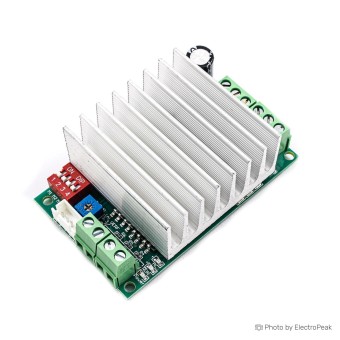
TB6600 4A stepper driver |
TB6600-class external drivers fit medium and large motors in the 2–4 A/phase range better than plug-in modules, and higher voltage helps torque at speed |
Skip if you expect serious CNC reliability from the cheapest TB6600 box; many buyers compare this class against DM542-class drivers instead |
| “I only have an H-bridge board already” |
L298N, TB6612, MX1508, or L9110S on hand |
L298N bipolar driver board, L298N dual-channel driver, TB6612 I2C 4-channel driver, MX1508 dual-channel driver, or L9110S dual-channel board |
These can drive small steppers in a basic H-bridge sense |
Skip for most NEMA17+ work because L298N, TB6612, MX1508, and L9110S lack proper chopper current limiting and microstepping |
Bipolar 4-wire motors are the normal fit for A4988-, DRV8825-, TMC-, and TB6600-class drivers, while 6-wire and 8-wire motors can often be wired as bipolar too. For most NEMA17-class builds, 12–24 V is the common supply guidance. For NEMA23-class CNC builds, 36–48 V is the usual target. If this is your first Arduino-based build, you may also need one of the Arduino boards that sends STEP/DIR or 4-wire control signals. If you go the unipolar route, this shows how ULN2003 boards connect in 28BYJ-48 projects.
A4988 vs DRV8825 vs silent TMC: what changes your buying decision
These are all StepStick-style options for small bipolar motors, but each one solves a different problem: low cost, more voltage/current headroom, or much lower noise.
| Driver |
Microstepping |
Current / voltage facts |
Noise / feature advantage |
Main trade-off |
| A4988 stepper driver module with heatsink |
1/16 |
Up to 2 A per coil, adjustable current limit by onboard potentiometer, with integrated thermal and overcurrent protection |
Cheapest mainstream STEP/DIR carrier and the usual baseline replacement |
It is the loud legacy option, and high-power long-term use needs extra heatsinking and ventilation |
| DRV8825 stepper driver module with 1/32 microstepping |
1/32 |
Up to 2.5 A per coil and 8.2 V to 45 V motor supply range |
More current and voltage headroom than A4988, with finer microstepping |
Still a loud driver family, and high-current use still needs proper heatsinking |
| TMC2100 silent driver with StealthChop |
1/256 |
1.2 A RMS continuous phase current |
StealthChop cuts noise dramatically, and this board is pin-compatible with A4988 and DRV8825 for drop-in upgrades |
Silent does not mean cool: the board can exceed 150°C at 1 A, and silent modes trade some torque |
| Makerbase TMC2226 module |
— |
Up to 2.5 A peak current with UART |
StealthChop2, StallGuard4, and UART make it the feature-rich quiet option, including the path to sensorless homing |
Full features require extra wiring and firmware support, not just plugging the board into a socket |
A4988 is the budget replacement. DRV8825 is the call when you need more current or 45 V headroom, and TMC-class boards are the quiet upgrade. Microstepping mainly improves smoothness and noise rather than real accuracy, so 1/256 is a motion-quality feature more than a precision guarantee. Sensorless homing is not automatic either: it needs a StallGuard-capable driver plus UART wiring and compatible firmware. If you want the baseline carrier route, this covers basic A4988 STEP/DIR wiring and setup.
CNC builds: when a plug-in module is enough and when to move to TB6600-class drivers
Plug-in modules work for light NEMA17 CNC or plotter duty, but CNC loads push buyers toward external drivers because current, supply voltage, cooling, and serviceability matter more on longer jobs. The usual break point is simple: light NEMA17-class machines can stay with carrier modules, while NEMA23-class builds or 2.8–4.2 A motors justify an external driver. Higher supply voltage improves torque at speed, which is why CNC shoppers look for 36–48 V-capable setups.
| Driver format |
Best motor class |
Key electrical facts |
Why choose it |
Main caution |
| Plug-in module |
Light NEMA17 CNC / plotters |
Typically A4988 or DRV8825 class |
Compact, cheap, easy to socket on small controllers |
Limited thermal and current headroom for longer or heavier-duty jobs |
| TB6560 external driver |
42 and 57 frame motors up to 3 A |
3 A max, 10–35 V range, sinusoidal drive control, 6N137 high-speed optical isolation |
Lower-current external option when you want a box driver format and isolated inputs |
Not suitable for motors requiring more than 3 A |
| TB6600 4A external stepper driver |
Heavier NEMA23-class and similar 2–4 A work |
4 A max, up to 1/32 microstepping, 9–42 V DC input, 6N137 high-speed optical isolation |
More current headroom than carrier modules, with an external format better suited to CNC wiring and cooling |
The card recommends a DC32V switching power supply for optimal use |
Serious CNC buyers often compare TB6600-class boxes with DM542-class drivers because community sentiment is strongly negative toward cheap TB6600 boxes for demanding machines, even though some users still find TB6600 acceptable for lighter 24 V duty. If you choose the external-driver route, this shows how a TB6600-style external driver wires to an Arduino or CNC controller.
Avoid the stepper driver failures shoppers regret most
- Set VREF or the current limit before loading the axis. Too low causes skipped steps; too high overheats both motor and driver. A common starting point is about 70–85% of the motor’s rated current, using the formula for the specific board and its sense resistors.
- Treat carrier boards as heatsink-minimum devices at about 1 A and up. An A4988 carrier with heatsink at 1.5 A and above generally also needs airflow, and thermal shutdown often shows up as mysterious mid-job pauses or lost steps.
- Never unplug or replug motor wires while the system is powered. That is one of the most common instant-kill failures on carrier drivers.
- Add a bulk capacitor of at least 100 µF on VMOT. This is widely recommended because LC spikes can exceed 35–40 V limits even on a 12 V supply.
- If the motor vibrates but does not turn, check coil pairs first. Identify pairs with multimeter continuity and ignore wire colors; wrong pairing is more common than a bad driver.
- On carrier boards, tie RESET and SLEEP together or drive both high, or the driver can look dead.
- Match the code model to the hardware. Carrier drivers and box drivers use STEP/DIR pulses, so AccelStepper or direct pulse control fits them; Arduino Stepper.h is for ULN2003 and L298N-style 4-wire control, not A4988, DRV8825, TMC, or TB6600 modules.
- A 2-channel PWM generator only generates signals and has no internal current control for direct stepper driving.
- If you plan to run the driver from an ESP32, choose a suitable ESP32 controller board and verify the STEP/DIR interface level before checkout.
For a deeper look at current-limit setup on a carrier board, see how current limit and STEP/DIR setup work on a DRV8825-style carrier.
Quick spec matrix for the products in this category
This table mixes true stepper drivers with generic motor-driver and signal-generator boards because shoppers often compare them side by side. Start with the “Best fit” and “Key caution” columns.
| Product name |
Family / control style |
Current / voltage facts |
Best fit |
Key caution |
| UL2003 4-phase stepper motor driver |
ULN2003 unipolar driver |
500 mA current capacity, XH-5P socket |
28BYJ-48-class unipolar motors and other low-current loads |
Not for bipolar NEMA17-class stepper jobs |
| ULN2003 driver board with LEDs |
ULN2003 unipolar driver |
Suited to 5 V to 12 V 28BYJ-48 use, onboard LED indicators |
Beginner-friendly 28BYJ-48 projects |
Limited to the unipolar small-motor use case |
| A4988 driver with heatsink |
Chopper STEP/DIR carrier |
1/16 microstepping, up to 2 A per coil, adjustable current limit |
Baseline small bipolar stepper builds |
Needs thermal planning at higher current |
| DRV8825 with 1/32 microstepping |
Chopper STEP/DIR carrier |
Up to 2.5 A per coil, 8.2 V to 45 V motor supply range |
Higher-headroom carrier for small bipolar motors |
Proper heatsinking still required near the limit |
| TMC2100 with StealthChop |
Silent STEP/DIR carrier |
1/256 microstepping, 1.2 A RMS continuous phase current |
Quiet-focused small-motor builds |
Can run extremely hot despite the silent operation |
| TMC2226 with StallGuard4 |
Silent STEP/DIR + UART carrier |
StealthChop2, StallGuard4, UART, up to 2.5 A peak current |
Quiet builds needing feature extras such as sensorless homing |
Extra wiring and firmware support needed for advanced features |
| TB6600 4A stepper driver |
External STEP/DIR driver |
4 A max, 9–42 V input, 1/32 microstepping, optical isolation |
CNC-oriented external-driver option |
Often cross-shopped carefully because cheap TB6600-class boxes vary in trust |
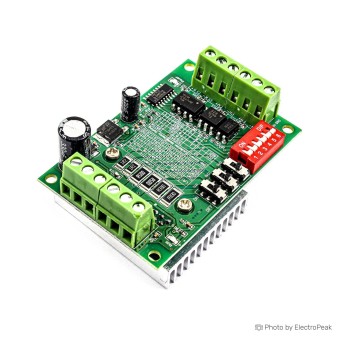
| TB6560 3A stepper driver |
External STEP/DIR driver |
3 A max, 10–35 V range, optical isolation |
Lower-current external-driver option |
Not for motors over 3 A |
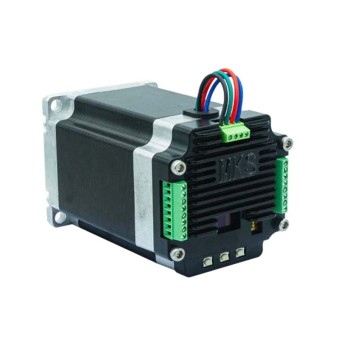
| MKS SERVO42C closed-loop driver |
Closed-loop stepper driver |
14-bit magnetic encoder, integrated OLED, up to 1000 RPM without losing steps |
Buyers seeking lost-step correction on NEMA17-class systems |
Closed-loop stepper correction is not the same as servo-style position reporting back to the controller |
| L298N bipolar driver board |
Dual H-bridge board |
2 A continuous, 3 A peak per channel |
Generic H-bridge comparison for DC motors or simple 4-phase control |
Remove the 5 V jumper above 12 V; not a modern chopper replacement |
| L298N dual-channel driver |
Dual H-bridge board |
2 A per channel, 5 V to 35 V range, onboard 5 V regulator |
Generic motor-driver reference point |
Lacks current limiting and microstepping for most serious stepper work |
| TB6612 I2C 4-channel driver |
I2C H-bridge board |
Four 1.2 A H-bridges, I2C interface |
Bus-controlled multi-motor outputs where I2C matters more than classic STEP/DIR |
Not a substitute for a chopper stepper driver |
| MX1508 1.5A dual-channel driver |
Low-voltage H-bridge board |
1.5 A per channel, 2.8 V to 10 V range, no heatsink required |
Compact low-voltage robotics |
Limited to 10 V and lacks current-limiting stepper control |
| L9110S dual-channel driver |
Low-current driver board |
800 mA continuous per channel, TTL/CMOS-compatible I/O |
Very small, low-current switching jobs |
Too limited for most stepper applications beyond tiny loads |
| 2-channel PWM generator |
PWM signal source |
1 Hz to 150 KHz |
Adjustable signal generation and testing |
No internal current control, so it is not a direct stepper power stage |
| TL494 PWM generator |
PWM pulse generator |
500 Hz to 100 kHz, 7 V to 40 V working voltage |
Control-signal generation |
Not a current-limiting stepper driver |
| XY-LPWM generator with LED |
PWM pulse generator with display |
Display, serial communication, stored settings |
Visual PWM setup and signal adjustment |
Duty ratio is inverted |
If you are leaning toward a quiet carrier board, this shows how a silent TMC-style driver is wired and configured.
FAQs on Stepper Motor Controllers
Which driver do I need for my stepper motor?
5-wire 28BYJ-48-class motors use ULN2003, bipolar 4-wire motors use A4988/DRV8825/TMC/TB6600-class drivers, and the driver’s current rating should meet or exceed the motor’s rated current. After that, choose by application: quiet indoor motion points toward TMC drivers, while larger CNC axes usually push you toward an external driver.
Do I need to match the driver voltage to the motor voltage?
No — chopper drivers regulate current, and typical guidance is 12–24 V for NEMA17-class builds and 36–48 V for NEMA23-class builds even when the motor coil voltage is much lower. The supply has to stay within the driver’s limits, but matching the printed coil voltage is the wrong selection rule.
Can I use an L298N or TB6612 to drive a stepper motor?
Yes, they can move small steppers, but they are constant-voltage H-bridge solutions with no chopper current limiting and no microstepping, so A4988/DRV8825/TMC-class drivers are the more appropriate choice for most bipolar stepper jobs. They make sense mainly when you already have one for a small demo or mixed DC-motor project.
Why does my stepper motor vibrate or buzz but not turn?
The most common cause is incorrect coil pairing or a loose connection on one phase, and coil pairs should be identified by multimeter continuity rather than wire colors. If the wiring is correct, check current limit and step rate from standstill next.
Do I really need to set VREF or the current limit?
Yes — current limit should be set to about 70–85% of the motor’s rated current, because too low causes skipped steps and too high overheats the driver and motor. VREF is not an output-voltage setting; it is what programs the current limit on boards that use a potentiometer.
Will a TMC driver make my machine silent, and what’s the catch?
Yes, StealthChop-based drivers such as TMC2100 and TMC2226 can dramatically cut noise, but silent mode trades some torque and full features such as sensorless homing need UART plus compatible firmware. They are the right fit when noise is the main complaint, not when every bit of torque margin matters more.
Do I need a heatsink, fan, or capacitor with a stepper driver board?
Yes — carrier boards at around 1 A and up generally need a heatsink, A4988 at 1.5 A and above often needs airflow, and a bulk capacitor of at least 100 µF on VMOT is a widely used protection step against destructive voltage spikes. Those accessories are part of a reliable setup, not optional cleanup items.
Glossary
- Stepper driver vs. controller
- The driver is the power stage that moves the motor, while the controller is the Arduino, ESP32, or other board sending the commands.
- VREF
- VREF is the reference voltage used to set current limit on adjustable drivers, so it directly affects skipped-step risk and overheating.
- STEP/DIR
- STEP/DIR is the two-signal control method used by A4988, DRV8825, TMC, and TB6600-style drivers, which is why they use different wiring and code from ULN2003 or L298N boards.
- Microstepping
- Microstepping divides each full step into smaller electrical steps to improve smoothness and reduce noise; it mainly changes motion quality, not true positioning accuracy.
- StealthChop
- StealthChop is Trinamic’s quiet drive mode, bought for major noise reduction but with some torque tradeoff versus louder torque-focused operation.
- StallGuard
- StallGuard is Trinamic load detection used for sensorless homing, and it needs a compatible driver, UART setup, and firmware support to work.
- Closed-loop stepper
- A closed-loop stepper uses an encoder to correct missed steps internally, but it does not automatically give your controller full servo-style position feedback.
- Bulk capacitor
- A bulk capacitor is the electrolytic capacitor placed on the motor supply input, typically at VMOT, to absorb spikes that can otherwise kill a driver.



Please complete your information below to login.
Sign In
Create New Account