Match the tool to the job first, then to the power source. For through-hole kits, keyboard builds, and most soldering tools for PCB repair, ~30–60W is the normal range, with 60W+ preferred when you expect lead-free solder, larger joints, or slower thermal recovery on ground planes. Modern pen-style cartridge irons can match budget stations for many hobby jobs. An electronics soldering station matters more when you solder regularly and want a bench stand, sleep convenience, and smoother workflow. For board repair, plan on soldering and desoldering together: add wick and a solder sucker, then finish by checking continuity and verifying a repaired joint after soldering.
| Use case |
Recommended tool class |
Why it fits |
Supplied product example |
What to add with it |
| Beginner PCB, kit, and through-hole work |
30–60W iron, ideally adjustable temperature |
This is the right range for typical electronics without jumping to an oversized iron. A simple option is the Goot KS-30R 30W soldering iron, a light-duty 30W bench iron with a Nichrome heater, R-48B tip, and 45g body. |
Goot KS-30R 30W soldering iron |
Solder, flux, tip cleaner, holder, mat |
| Repair and rework |
Iron plus desoldering tools |
Repair work needs solder removal as much as soldering. Add GOOTWICK CP-3015 desoldering braid and a solder sucker because they handle different removal jobs. |
GOOTWICK CP-3015 desoldering braid |
Wick, solder sucker, flux, cleaner |
| Field, RC, drone, and mobile work |
USB-C PD iron in the 65–140W class |
The respected portable class is USB-C PD, not a generic USB pen. The T65 smart soldering iron uses Type-C with PD/QC, takes 9-20V input, and is rated 65W, which is the kind of portable power class that can do real work. |
T65 smart soldering iron |
PD/QC power source, solder, flux, cleaner |
| Very light-duty USB convenience |
5V USB pen |
A 5V 8W USB soldering iron pen is a separate class: 5V, 8W, under-15-second warm-up, and 25-second automatic idle shut-off. It is for light-duty use, not a substitute for a real field iron. |
5V 8W USB soldering iron pen |
USB power source, realistic expectations |
| Heavy-gauge wiring and large connectors |
100W-class handheld iron |
A 100W soldering iron makes sense when the joint has real thermal mass. The LSH100B 100W soldering iron is a 220V handheld iron with a 480°C/520°C range, but this class is for thick cables and large connectors, not routine PCB work. |
LSH100B 100W soldering iron |
Large-work consumables and a heat-safe workspace |
| Battery pack building with 18650 cells |
Spot welder |
Battery packs should be spot welded, not soldered directly. The portable 5000mAh spot welder gives a clear route out of iron selection with 1200A max current, 5-level power adjustment, and support for 0.1–0.2mm nickel sheets. |
portable 5000mAh spot welder |
Nickel sheets; note that it cannot weld copper, aluminum, or rusty surfaces |
Minimum viable starter setup: what to buy besides the iron
A beginner soldering kit for electronics works better when you build around a usable iron and the missing consumables, not the cheapest bundle. A realistic starting budget is about $30–50 for an iron worth owning plus roughly $20 in consumables. Once that basic setup is covered, many first-build shoppers move on to Arduino boards for practice projects and simple builds.
- Solder: Leaded 63/37 or 60/40 is the easiest place to start for hobby electronics, and ~0.5–0.8mm is the standard diameter range for electronics work.
- Flux: If solder “won’t flow,” missing flux is one of the most common reasons. Use rosin flux or no-clean flux only; never use plumbing or acid flux on electronics.
- Tip cleaner: A brass-wool-style cleaner is the better day-to-day default because it cleans without water and without the temperature drop of a wet sponge. The copper wire tip cleaner is a 15g, waterless copper-wire cleaner built for that role. The 4x6cm PVA cleaning sponge is still useful if you prefer sponge cleaning, but it must be moistened before use.
- Repair tools: Repair work needs both a solder sucker and desoldering wick. A solder sucker handles bulk through-hole removal; GOOTWICK CP-3015 braid handles pads and cleanup with its 3.0mm width, 1.5m length, non-chlorine RMA flux, lead-free build, and anti-static design.
- Bench support: A holder and surface protection are practical day-one items, not extras. The S-160 magnetic silicone repair mat gives you a 450×300mm, 500°C-rated work surface with 124 screw positions and 3 covered part boxes. The TE-801 helping hand with LED magnifier adds an integrated iron stand, dual LED lights, and 65mm / 17mm glass lenses.
- Basic troubleshooting tool: If the joint looks fine but the circuit still does not work, a multimeter is the next tool to reach for for basic troubleshooting once a joint is made but the circuit still does not work.
Wattage, temperature, and tip choice: the three specs beginners misread
Wattage is heating capacity and thermal recovery, not the temperature setting. That is why a 30W iron can be enough for small through-hole jobs, while 60W+ is the better call for lead-free solder or larger joints that pull heat away quickly. For leaded through-hole work, ~300–350°C is a practical starting range. Push past ~360–380°C too early and flux burns off faster while tips oxidize sooner. That makes soldering harder, not easier.
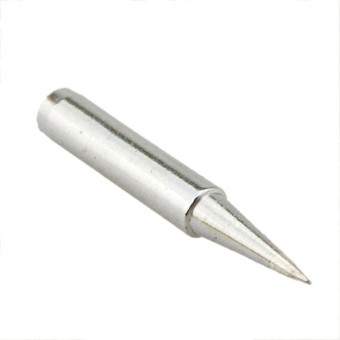
Solder choice changes the setup. Leaded 63/37 is eutectic, so it melts and freezes at 183°C, which is one reason it is easier to learn with than lead-free alloys. Lead-free solder melts around ~217°C+ and needs more heat and better recovery. Tip choice matters just as much: a ~2–2.4mm chisel tip is the default for most through-hole electronics because it transfers heat into both the pad and the lead. Needle or conical tips look precise but transfer heat poorly and are a common source of beginner frustration.
The Goot KS-30R 30W iron is a simple light-duty iron. The T65 65W iron with 80°C–420°C adjustment and OLED display shows why adjustable control is easier to dial in. At the other end, the LSH100B 100W iron has fixed high-temperature behavior at 480°C/520°C with ±8% tolerance and 220V input, which is useful for heavy work but not the default PCB choice.
| Spec question |
Specific answer |
Why it matters when buying |
| What does wattage mean? |
Wattage is power and recovery speed, not “how hot it gets.” |
It tells you how well the iron keeps working on larger joints and ground plane connections. |
| What temperature should I start with? |
~300–350°C is a typical starting range for leaded through-hole work. |
It is hot enough for most small electronics without immediately burning through flux. |
| Leaded or lead-free? |
63/37 and 60/40 are easier to learn with; lead-free melts around ~217°C+ and usually needs more heat. |
This changes how forgiving the setup feels and whether you need stronger recovery. |
| What tip shape should I buy first? |
Start with a ~2–2.4mm chisel tip, not a needle/conical tip. |
Better contact means better heat transfer and easier joints on most through-hole parts. |
Portable vs bench tools: when USB-C irons make sense and when they don’t
The trusted portable class is USB-C PD at 65–140W, not generic 5V USB pens. Pen-style tools are not automatically entry level; a modern USB-C PD iron can perform near station level if the power source is capable. That makes portable irons practical for RC, drone, FPV, and field-service work, and for space-limited benches. One catch matters: buyers often discover too late that a USB-C iron will not reach temperature properly on an underpowered phone charger.
| Portable option |
Input / power class |
Best for |
Limitation to state plainly |
| T65 smart soldering iron |
Type-C PD/QC, 9-20V external source required, 65W |
Real portable electronics work, field repair, RC and drone gear, space-limited benches |
Charger or power bank is not optional here; it needs a capable external PD/QC source to perform as intended |
| 5V 8W USB soldering iron pen |
5V USB, 8W |
Very light-duty tasks where convenience matters more than output |
This is not the same class as a 65W USB-C iron and should not be treated as a replacement for a bench iron or electronics soldering station |
Spec matrix for supplied soldering and support tools
| Product name |
Tool type |
Key specs |
Best for |
Trade-off / requirement |
| Goot KS-30R 30W Soldering Iron |
Light-duty soldering iron |
30W, Nichrome heater, includes R-48B tip, 45g lightweight design |
Light electronics work, home use, educational projects |
Simple low-power class; better suited to small jobs than heavy thermal loads |
| LSH100B 100W Soldering Iron |
Heavy-duty handheld iron |
100W, 480°C/520°C range, 1.2m wire length, 220V input, ±8% fixed high-temperature behavior |
Thick cable, large connectors, high-heat work |
Not the default choice for routine PCB soldering; requires 220V |
| Copper Wire Soldering Tip Cleaner |
Tip cleaner |
Copper-wire construction, heat-resistant, 15g, waterless cleaning |
Day-to-day tip cleaning without water |
Cleaner only; does not replace flux or tip maintenance habits |
| T65 Smart Soldering Iron - 65W |
Portable precision soldering iron |
65W, 80°C–420°C adjustable range, Type-C PD/QC, OLED display, external 9-20V source required |
Portable precision work and bench use where a compact iron makes sense |
Needs a separate capable PD/QC power source |
| 5V 8W USB Soldering Iron Pen |
Compact low-power USB iron |
5V USB, 8W, <15s warm-up, 25s auto idle shut-off |
Light-duty portable touch-up work |
Low-output class; not a high-power field iron |
| Portable Spot Welder - 5000mAh |
Portable spot welder |
5000mAh, 1200A max current, 5 power levels, welds 0.1–0.2mm nickel sheets |
18650 and 32650 battery pack building |
Cannot weld copper, aluminum, or rusty surfaces |
| Solder Tip Cleaning Sponge - 4x6cm |
PVA sponge cleaner |
PVA sponge, 4x6cm, high absorbency, expands when wet, must be moistened before use |
Replacing or using a traditional wet sponge cleaner |
Moisture use drops tip temperature compared with brass-wool-style cleaning |
| GOOTWICK CP-3015 Desoldering Braid |
Desoldering braid |
3.0mm width, 1.5m length, non-chlorine RMA flux, lead-free, anti-static |
Repair, rework, pad cleanup, solder removal |
Best paired with a solder sucker for full repair coverage |
| S-160 Magnetic Silicone Repair Mat |
Silicone soldering mat |
500°C heat resistance, 450×300mm, 124 screw positions, 3 covered part boxes |
Surface protection and parts organization during repair |
Workspace accessory, not a soldering tool by itself |
| TE-801 Helping Hand with LED Magnifier |
Helping hands magnifier workstation |
Dual LED lights, 65mm and 17mm glass lenses, integrated iron stand, steel-reinforced base, requires 3 × AAA batteries or external adapter not included |
Small repair work, inspection, hands-free holding |
Power for the LEDs is required separately |
FAQs on Soldering Tools
Glossary
- Wattage:
- The iron’s heating power and thermal recovery capacity, which affects how well it keeps up on larger joints rather than how hot you set it.
- Temperature control:
- The ability to set and hold a specific working temperature, which is the recommended baseline for electronics soldering.
- Chisel tip:
- A flat tip shape that transfers heat into the pad and lead together, making it the default first choice for most through-hole work.
- Desoldering wick:
- Flux-coated copper braid that pulls molten solder off pads and joints, especially for cleanup and repair work.
- USB-C PD:
- A power standard that lets portable irons draw real working power, which is why 65W-class USB-C irons are a different category from 5V USB pens.
- Leaded solder (63/37, 60/40):
- Tin-lead solder alloys that are easier for beginners to work with than lead-free, with 63/37 especially known for clean melting and freezing behavior.



Please complete your information below to login.
Sign In
Create New Account