
Product added to cart

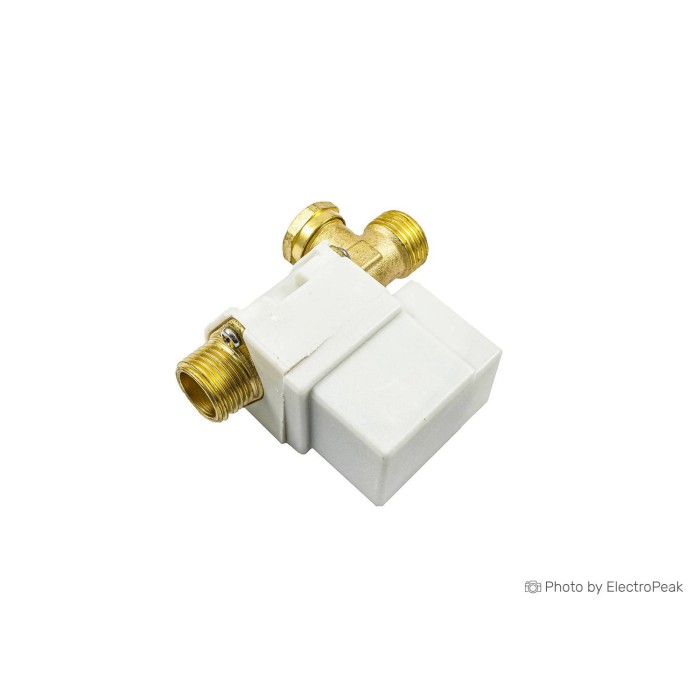
12V Water Solenoid Valve with Filter Cover
SAVE
As low as $3.8500
In stock
Only %1 left
SKU
misc-05-012
Ships in 2-3 business days, then:
Free delivery in 12-15 days by Tracked Economic Shipping on orders over $100.
Free delivery in 7-10 days by Express Shipping on orders over $300.
More shipping info

Shop with confidence Learn More
 220v AC Mini Brushless Water Pump Previous
12V Water Solenoid Valve Review: Fit, Pressure and Control Requirements
This electromechanical fluid-control valve provides inline shutoff through a 12VDC normally closed solenoid coil. Built for automated fluid systems and solar water-heater installations, it stays closed until powered, making it a practical switch for non-potable line management. Before installation, verify system pressure, thread standards, fluid compatibility, and driver circuitry. Because wetted-material certificates, flow ratings, and IP certifications are not published, this model is not intended for drinking water, corrosive chemical transport, gravity-fed drainage, or safety-critical plumbing.
For automated plumbing layouts, see our selection of water-control components for line sizes and control voltages that match your project.
Specifications of 12V Water Solenoid Valve with Filter Cover - Normally Closed, 4.3W
- Type: Normally closed
- Options: Plastic/Metal filter head
- Options: Copper filter head (Optional)
- Water Pressure: 0.02Mpa ~ 0.8Mpa
- Control Voltage: 12Vdc
- Control Current: 315mAh
- Power: 4.3W
- Use of media: liquid water
- Use of media: other liquid suitable for the product
- Life Time: >100,000 times
- Medium temperature is about: 1°C ~ 88°C
- Copper filter head size: 86mm x 77mm
12V Water Solenoid Valve Specifications Explained
Assessing this solenoid valve for an automation build means understanding how the published ratings translate into electrical and fluid-system limits. The table below explains what each factory figure means when planning the hardware.
| Specification | Published Value | Why It Matters |
|---|---|---|
| Valve Type | Normally closed | The internal orifice blocks flow while de-energized. Applying 12VDC opens the internal passage, providing fail-safe shutoff during an unexpected power loss. |
| Control Voltage | 12Vdc | Requires a separate 12VDC power rail. Microcontroller development boards operating at 3.3V or 5V logic cannot drive this coil directly from an I/O pin. |
| Power & Current | 4.3W / 315mAh | A 4.3W coil operating at 12VDC implies a continuous draw around 358mA. The published 315mAh figure expresses battery capacity rather than an operating-current rating; measure actual coil current in mA on a bench supply before selecting switches, traces, and fuses. |
| Working Pressure | 0.02Mpa ~ 0.8Mpa | Equivalent to roughly 2.9 psi to 116 psi. Differential pressure across the valve seat is necessary to assist operation; installations with lower supply pressures can fail to open or close properly. |
| Medium Temperature | 1°C ~ 88°C | Accommodates cold line water and heated runs found in solar thermal collectors. This thermal range does not guarantee continuous high-temperature exposure or food-grade certification. |
| Filter Head Options | Plastic/Metal, Copper (Optional) | An integrated filter cap intercepts coarse particulate at the inlet port. Micron ratings, cleaning procedures, and included variants are not published, so external inline filtration remains sensible for sediment-laden supplies. |
| Copper Head Size | 86mm x 77mm | Represents the physical boundaries of the copper filter enclosure itself. Total valve body length, port-to-port spacing, and overall depth are not defined by this measurement. |
| Operational Life | >100,000 times | Indicates cycle capability under factory test conditions. Real-world longevity depends on cycling frequency, thermal management, particulate exposure, and operating pressure. |
For reliable operation, power the valve from an external source such as a dedicated 12VDC valve power supply that maintains steady voltage during actuation.
12V Water Solenoid Valve Compatibility and Installation Requirements
Integrating a 12V electromechanical valve into a microcontroller-driven setup requires isolating sensitive digital logic from high-current inductive spikes. Connecting this coil directly to an Arduino, ESP32, or Raspberry Pi GPIO header will damage the microcontroller. Use an intermediary power stage to switch the 12VDC branch.
| System Component | Requirement | Implementation Notes |
|---|---|---|
| Logic Interface | Incompatible for direct drive | Digital pins supply 3.3V or 5V at low current (10–40mA), which cannot energize a 4.3W 12VDC coil. |
| Switching Stage | Required | Use an optoisolated relay module or an N-channel MOSFET/transistor driver circuit sized for continuous DC switching. |
| Inductive Protection | Required for transistor circuits | When the magnetic field collapses, high-voltage back-EMF is generated. Install a reverse-biased flyback diode (such as a 1N4007) across the coil terminals when using discrete transistor or MOSFET switches. |
| Operating Power | Dedicated 12VDC supply | Avoid sharing unregulated coil power directly with sensitive microcontroller logic rails to prevent brownouts. |
| Plumbing Connections | Verification required | Port diameters, thread standards (NPT, BSP, or metric), and gender are not published. Confirm fitting dimensions upon receipt before purchasing adapters and thread sealant. |
| Flow Orientation | Directional | Fluid must enter through the designated inlet port to utilize line pressure for sealing. Follow the directional arrow cast or stamped onto the valve body. |
Control the valve from a microcontroller with a relay control for a 12V valve, which provides galvanic isolation between logic pins and the coil supply. For a step-by-step example of automated relays and valves in garden environments, review our guide to automatic watering control.
12V Water Solenoid Valve Limitations: Threads, Pressure and Media
A successful installation depends on recognizing this valve's limits. It is not an all-purpose plumbing fitting, and several missing specifications require verification before commissioning.
- Unspecified Port Threads: The nominal diameter, thread pitch, and standard (G, BSPP, BSPT, or NPT) are not published. Inspect and measure the received ports with calipers or thread pitch gauges before ordering rigid plumbing adaptors.
- Minimum Pressure Thresholds: The operating range starts at 0.02MPa (roughly 3 psi). Diaphragm-assisted valves rely on differential line pressure to push the internal diaphragm off its seat. In unpressurized or gravity-fed systems—such as rain barrels resting at low elevations—the valve may click audibly without passing fluid or fail to shut off fully. If your project lacks line pressure, a direct-acting 24V valve with no minimum pressure requirement provides positive zero-pressure actuation, though it is designed for 24VDC air and cooling media rather than documented water service.
- Flow Dynamics: Diaphragm water valves operate in a single direction. Plumbing against the directional arrow allows back-pressure to lift the seal, leading to continuous internal leaks. Flow coefficients (Cv/Kv) and orifice diameters are not published, so pressure loss must be measured directly in high-flow setups.
- Fluid Restrictions: The manufacturer lists liquid water and other suitable liquids but publishes no seal elastomer specifications (such as NBR, EPDM, or FKM) or wetted metallic alloys. Do not deploy this unit for potable drinking lines, food processing, volatile fuels, aggressive acids, or closed-loop aquarium setups sensitive to trace metal leaching.
- Environmental and Thermal Ratings: Without a published IP rating, protect the coil terminals and casing against outdoor rain, condensation, and direct splashing. Continuous-energization duty cycles are also unspecified; test coil temperature during bench setup if the valve must remain energized for long durations.
12V Water Solenoid Valve for Solar Water Heater and Water Automation
This valve suits non-potable water automation when installed within its rated pressure and temperature boundaries.
A confirmed manufacturer application is solar water-heater management, where the 1°C to 88°C rating handles collector fluid temperatures. In these setups, the valve serves as an automated fill or isolation point. Paired with a dedicated solar hot-water circulation pump, it controls thermal loop flow under line pressure.
In maker automation, the valve handles pressurized irrigation manifolds, greenhouse watering zones, and bulk reservoir replenishment. When supplied by municipal lines or an active pump, the normally closed configuration ensures flow stops instantly if line power drops. For compact irrigation loops that need auxiliary delivery pressure, incorporate a compact 12V water pump into the feed line to satisfy the minimum 0.02MPa threshold.
Automated distribution layouts should remain non-potable unless certified wetted materials are separately verified. Install manual shutoff ball valves before and after the solenoid to allow maintenance without draining the main reservoir.
12V Water Solenoid Valve Quick Start Check
Perform this bench check before cementing fittings or installing the valve in permanent infrastructure:
- Inspect Body Markings: Examine the port threads, terminal spade lugs, and filter housing. Locate the cast flow arrow indicating flow direction. Use a caliper to confirm thread pitch and diameter before buying brass or PVC adapters.
- Measure Coil Resistance: Place a multimeter across the two coil terminals. Verify a steady resistance reading to ensure the internal coil winding is intact.
- Test Electrical Actuation: Connect the coil across a current-limited bench supply set to 12VDC. Listen for a distinct, crisp metallic mechanical click as the internal core pulls back. Measure operating current in mA to confirm power draw against your power budget.
- Confirm Plumbing Direction: Connect your temporary water line to the inlet port upstream of the directional arrow. Confirm that the filter assembly sits on the inlet side.
- Perform a Pressurized Leak Test: With the line pressurized between 0.02MPa and 0.8MPa and the coil de-energized, verify that zero water passes the seat. Apply 12VDC to verify unobstructed full flow, then de-energize to confirm immediate, complete shutoff.
- Monitor Thermal Rise: If your application requires keeping the valve energized for extended intervals, leave it active on the bench for 30 minutes while monitoring coil casing temperature. If the coil becomes excessively hot to the touch, shorten your cycle intervals or select a lower-duty control scheme.
If the coil clicks on activation but fluid does not emerge, check that line pressure meets the 0.02MPa minimum and that the valve is not plumbed backward.
12V Water Solenoid Valve FAQ and Buying Checklist
Frequently Asked Questions
Is this a normally open or normally closed 12V water solenoid valve?
It is a normally closed valve. The internal orifice remains sealed when unpowered and opens only when 12VDC is applied to the coil terminals.
What thread size does this 12V water solenoid valve use?
Inlet and outlet thread sizes, genders, and standards are not published. Confirm port dimensions directly on the received unit with calipers or pitch gauges before sourcing plumbing fittings.
Will this 12V solenoid valve work from a gravity-fed tank?
It is unlikely to operate reliably without assistance. The valve requires a minimum water pressure of 0.02MPa (~2.9 psi); low-head gravity setups generally lack the differential pressure needed to lift and seat the internal diaphragm mechanism.
Can I connect this valve directly to an Arduino or Raspberry Pi pin?
No. Microcontroller pins operate at 3.3V or 5V and supply minimal current, which cannot actuate a 4.3W 12VDC coil. Use an intermediate relay module or MOSFET switching circuit.
How much current does the valve draw?
The coil consumes 4.3W at 12VDC, which corresponds to approximately 358mA. The published 315mAh value uses battery-capacity notation rather than steady-state operating current; confirm draw with a multimeter during bench testing.
Does the filter cover mean I do not need an external strainer?
No. The built-in filter cap captures coarse debris, but its mesh rating and cleaning procedure are not published. Use a dedicated, serviceable upstream strainer if your water source contains fine silt or particulate.
Is this valve safe for drinking water, food, aquarium use, chemicals, oil, fuel, or hot water?
No. The manufacturer publishes no food-contact approvals, potable-water certifications, or wetted elastomer specifications. Use it solely for non-potable water within its 1°C to 88°C operating boundary.
Which way does water flow through the valve?
Flow is unidirectional. Install the valve strictly in line with the directional arrow cast or stamped onto the casing.
Can this valve stay energized continuously?
The listing provides no continuous-duty or maximum-on-time rating. Bench-test the coil under expected operating intervals to evaluate heat buildup before leaving it energized for hours.
What is the flow rate of this solenoid valve?
Flow coefficients, internal orifice sizes, and pressure-loss curves are not published. Flow rates depend entirely on supply pressure and line restrictions in your specific setup.
Purchase Decision Summary
- Ideal for: Pressurized non-potable water automation lines, bench-scale fluid experiments, and solar water-heater loops with 12VDC control systems and verified line fittings.
- Maybe for: Greenhouse watering manifolds and reservoir-fill control, provided the installation delivers at least 0.02MPa operating pressure and can accommodate unknown thread types.
- Avoid if: Your system is unpressurized or gravity-fed, requires certified food-safe or potable materials, handles fuels or aggressive chemicals, operates submerged or exposed to heavy outdoor spray without an enclosure, or requires documented continuous-duty ratings.
Buying Checklist
- I have a 12VDC power source capable of supplying steady continuous coil current.
- I have an optoisolated relay or a MOSFET switching board with a flyback diode.
- My water line maintains operating pressure between 0.02MPa and 0.8MPa.
- My fluid is non-potable water within a 1°C to 88°C temperature range.
- I can measure the received port dimensions before purchasing plumbing adapters.
- I will mount the unit aligned with the body flow arrow.
- My installation does not require certified potable, chemical-resistant, or submersible ratings.
Write Your Own Review

Please complete your information below to login.
Sign In
Create New Account